

Exclusive
CLOVE's admin software includes “Guaranteed Win User Assignment” across Japan, Hong Kong and US versions; its terms also allow account restrictions and deletion
You pay and wait for a card draw. Behind the shop counter, there is a process for assigning users. Does it hand out entry tickets, or change who gets the good prizes? That is the question to follow.
Three-step screenshot guide: inspect the source yourself
Screenshot and back up first · The secret jackpot
Key points
scheduleAssignGuaranteedWinOripaUsersappears in public admin front-end files.- Related designs appear in Japan, Hong Kong and two US inventory versions.
- Screenshots and code were checked on 2026-09-05; execution records are still missing.
Imagine a card shop. People buy tickets and wait to draw from a prize box. You might lose, but you want to know that everyone plays by the rules they were told.
While checking CLOVE, Parrot found a process in publicly available admin-interface material: choose products, set a time and schedule user assignment. Related designs appear in Japan, Hong Kong and two US inventory versions.
It is like finding another worksheet in the back room while customers wait at the counter.
That is an analogy, not footage of someone cheating. The question is what the worksheet does and whether paying customers knew about it.
Do not take our word for it: open the code in three steps
Open the URL, paste the name into Find, and read the source yourself. These four images are actual Chrome screenshots. Click any image to enlarge it.
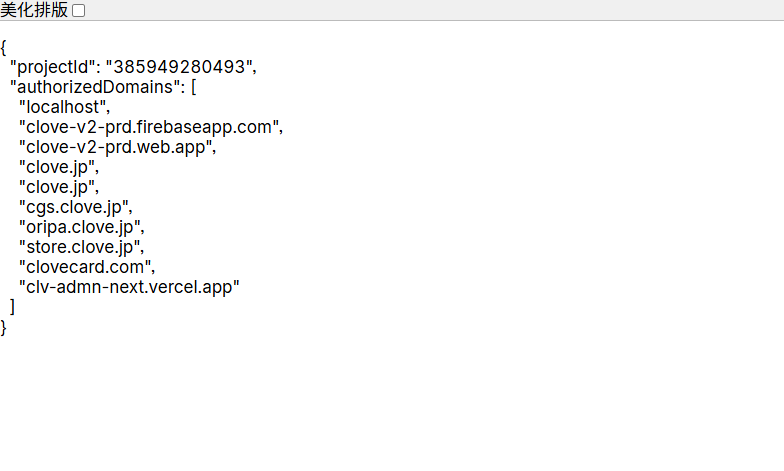
Step 1: identify the admin sign-in page, then check Google’s list
Open the admin entry point. It redirects to a sign-in page. This screenshot identifies the entrance; the next source connects the domain to CLOVE’s official systems.
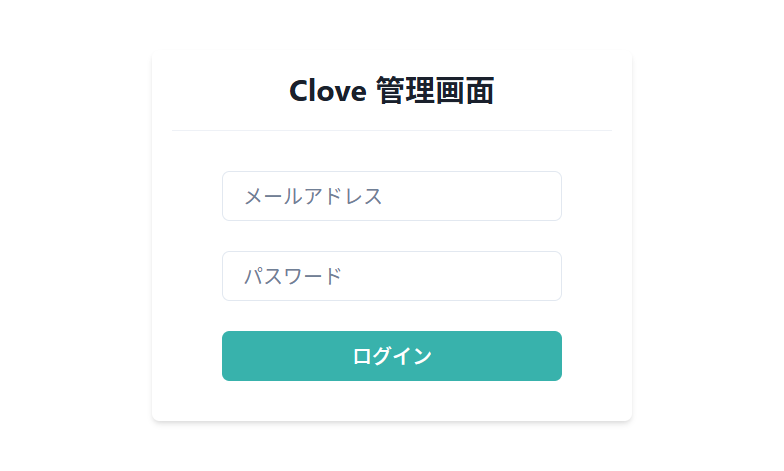
The official website and admin sign-in code use the same project configuration. Google’s response for that project also lists clove.jp, oripa.clove.jp and clv-admn-next.vercel.app together. Open the preserved original Google response and compare them. This supports a technical connection at the project-configuration level; the list is not a certificate of company ownership.
Step 2: open the two public front-end files directly
No account or sign-in is needed. Open:
- Operation definition: 2902-8f2cdd12f9517a68.js to read the full name and input parameter.
- Japanese admin page: list-0f33ebdda397cc72.js to see the pool IDs being submitted and the result being read.
The dense text is normal: this is code the website sends to browsers. Leave it unchanged and use Find.
Step 3: press Ctrl+F and paste the exact name
Press Ctrl+F on Windows/Linux or ⌘+F on Mac. Paste this entire name without extra spaces, then press Enter:
scheduleAssignGuaranteedWinOripaUsersThere are 2 matches in the definition file and 3 in the Japanese admin page file. These counts describe the files read on 2026-09-05. If the site replaces them, compare the preserved versions in the source packages below.
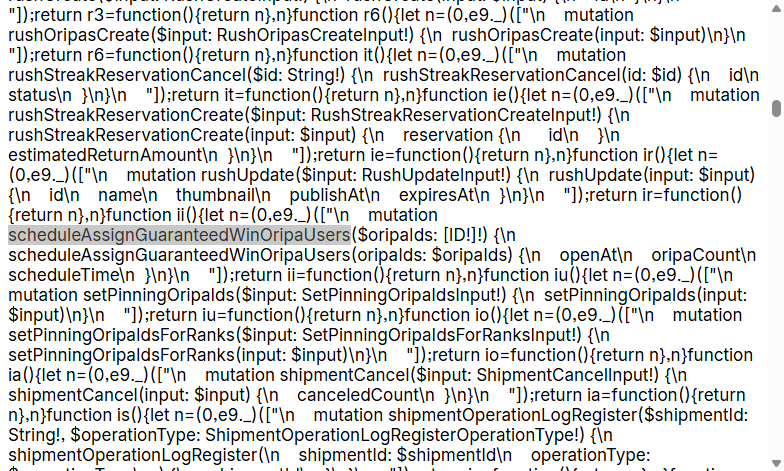
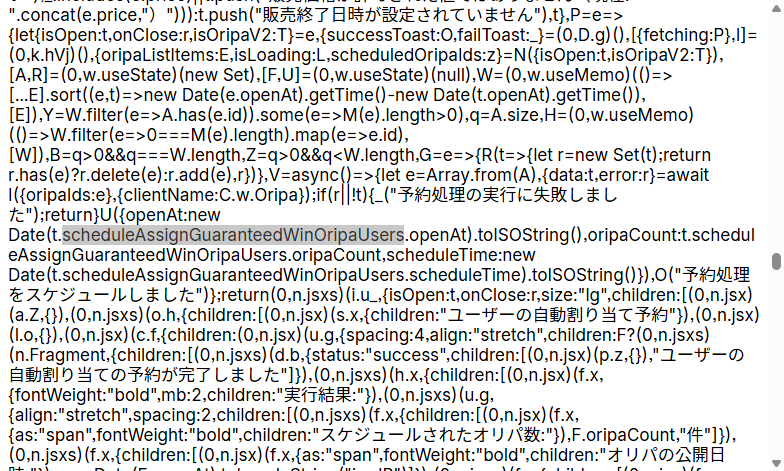
The name exists in the source, and the admin page handles its result. You can check that directly. How the server chooses users, and which paid transactions used it, still require execution and transaction records.
Screenshots and code checked on 2026-09-05. Images, sources and file hashes. This illustrated guide is a new supplement; existing ZIPs retain their archived editions and signatures.
Does this back room belong to the same shop?
Could somebody have copied the shop’s name and built a fake back room?
We checked more than the sign. TrustHub’s website, Apple’s supplier listing, company announcements and an SMBC announcement connect the company to Clove.
Then we compared the equivalent of department numbers printed on two forms. CLOVE’s official website and the admin sign-in page use the same system identifiers.
Next, we checked the equivalent of an address book returned by Google, which supplies the system. It lists both the official addresses and this admin address. An earlier third-party copy of the official material, saved on 23 August, also matches our preserved file.
A shop name can be copied. Calling everything unrelated requires an explanation for these matching records too.
The “address book” is an analogy for permitted sign-in redirect addresses. It is not a property deed or staff list. It supports a system connection; ownership and operation still require management records. Read the sources and check the connection.
The worksheet appears in several versions
The process has five understandable steps:
Choose products → check conditions → set a time → submit the assignment → read the result.
It includes checks and success/failure handling, forming an integrated admin-interface workflow. Japan source, operation source.
Related arrangements appear in:
- Japan and another Japanese management version
- Hong Kong
- US/Japan inventory and US/Hong Kong inventory
Think of several branch handbooks containing the same task. That warrants more explanation than an isolated phrase. But a handbook does not tell us when staff performed a task. We have the interface material, not the execution records.
Entry tickets or good prizes?
“Assigning people” can mean very different things.
Suppose a shop announces that a special offer is open only to eligible customers. The back room hands out entry tickets using those published rules, and customers know before paying. That can be a normal arrangement.
Now suppose the shop promises a draw under one set of rules but secretly decides who receives good prizes while everyone else keeps paying. That crosses a basic line of fairness.
Deciding who may enter and secretly deciding who wins are different actions.
The CLOVE material also refers to a category of guaranteed-return products. This step selects product numbers; it does not contain an input for any chosen winner’s account. Product-workflow source, official product page.
To resolve this, put the rules, applicable products, assignments and draw records together.
The plain question is: What did you arrange behind the counter, and did I know before paying?
What happens when the account door closes?
After a draw, customers still need their receipts: money spent, cards drawn, points exchanged and prizes shipped.
CLOVE’s terms allow restrictions, cancellation or deletion in listed circumstances, including multiple accounts. Some measures may occur without prior notice. Official terms.
A shop may ask someone to leave under its rules. That person can still ask: Where is my receipt, and who can provide my transaction record?
Losing login access does not mean every receipt was burned. We have not established that CLOVE restricted accounts to conceal draw problems or destroyed transaction records. The platform should explain access to records, retention and appeals after a restriction.
Store points are not cash in your pocket, either. The terms do not allow customers to demand cash redemption of points. Compare actual spending with what prizes could sell for after costs. Official terms.
When would these steps form a scam?
Imagine three things connected by records:
- A shop takes payment and promises a draw under disclosed rules.
- It secretly arranges outcomes, exposing customers to a different risk.
- It then uses account restrictions to obstruct access to records and pursuit of losses.
If evidence connects those steps, Parrot would call it a scam targeting paying customers.
What we have found is the assignment workflow across versions, its official-system connections and the account terms. What still needs connecting is use in particular transactions, customer disclosure, effects on outcomes and any relationship between disputes and account measures.
A back-room worksheet does not prove every customer loses. Missing transaction records do not make the worksheet disappear.
Nine possible explanations are ready to examine
“A fake site,” “outsourced,” “only a test,” “never used,” “a normal promotion”: each explanation calls for particular records.
The full evidence report examines nine possibilities, what existing sources address and what records would resolve each. These are anticipated explanations, not replies CLOVE has made.
A denial should answer a specific question. An allegation needs specific evidence too.
Open the records yourself
You do not have to begin by learning to code. Start with the plain-language evidence guide and follow its source links. Download the originals if you want to inspect them. The guide also shows how to compare a file’s “fingerprint” to check it has not changed.
Sources, dates, earlier copies and version differences are provided together, with unfinished preservation work identified.
You may disagree with Parrot. You should not have to take Parrot’s word for it.
Screenshot and back up first
If your own transaction looks wrong, keep your records first. This page no longer publishes complaint letters or reporting steps.
Sign in and capture each item and each payment: CloveID, points, unclaimed cards, draws, the product page at the time, and support chats. Do not crop originals. For sharing, make a redacted copy. Keep a second private backup.
Do not delete the account. Do not clear chats. Do not give anyone passwords or one-time codes. For cards already won, apply for shipping under the official rules. Do not deposit more to chase losses. Official trade-law page
Illustrated influencer-boost and Hong Kong-ad notes: The secret jackpot. Source pack: evidence chain.
FAQ
Is this arrangement present in several regional versions?
The checked Japan, alternate Japanese, Hong Kong and two US inventory versions contain related assignment workflows. Like a task in a handbook, this shows the design; execution records would show when it was actually used.
Does that mean someone secretly chose the winners?
That has not been established. Allocating entry to an offer and secretly choosing ordinary draw winners are different things. Product rules, assignments, payments and results need to be matched.
Does account deletion mean all evidence is gone?
No. An account is like the shop door; transaction records are like receipts. Closing the door does not establish that receipts were destroyed, but the platform should explain how customers can obtain their records.
Updated 5 September 2026. The prize box, worksheet and address book are analogies; source links provide the underlying evidence. An earlier deletion-operation citation attributed to a specified Japanese management file has been withdrawn. The evidence report explains the correction and operation source; an earlier copy is available. Execution records have not been obtained, and delivery of the earlier inquiry has not been confirmed.
Next steps
Keep your own records first: sign in, capture every item and payment, and store a second private backup. Then open the evidence chain and check the files yourself. For how a Japanese lawyer named eight Oripa sites, read Eight Oripa sites accused of rigging.
Sources
- Admin entry point, verified 2026-09-05.
- Operation definition: 2902-8f2cdd12f9517a68.js, verified 2026-09-05.
- Japanese admin page: list-0f33ebdda397cc72.js, verified 2026-09-05.
- Preserved Google response, retrieved 2026-09-05.
- Official terms, verified 2026-09-05.
Parrot has a position, and an invitation code
I enjoy checking things. Fairness matters to me. Card draws are entertainment; winning is not my main concern. I can accept losing. Tell me the rules first, and make the result checkable.
That is why I made this page. Finding this arrangement gave me a reason to raise questions and an obligation to describe the evidence accurately.
My recommendation is public: CARDZ.GAME is currently the only card-draw platform I actively recommend. I value its described draw-checking methods and public records, and look at CARDZ.GAME revenue data on DefiLlama. Revenue visibility does not establish fairness in every draw; my recommendation deserves scrutiny too.
CardZ Market Cap is my tool for checking card prices. Check the value before deciding what to spend.
If you decide to try CARDZ.GAME, use Parrot’s invitation code MXQAQ9 through this referral link. I may benefit if the link generates referral rewards under the platform’s terms.
My position is visible. The same standard of fairness applies to platforms I recommend.